Designing for the hand
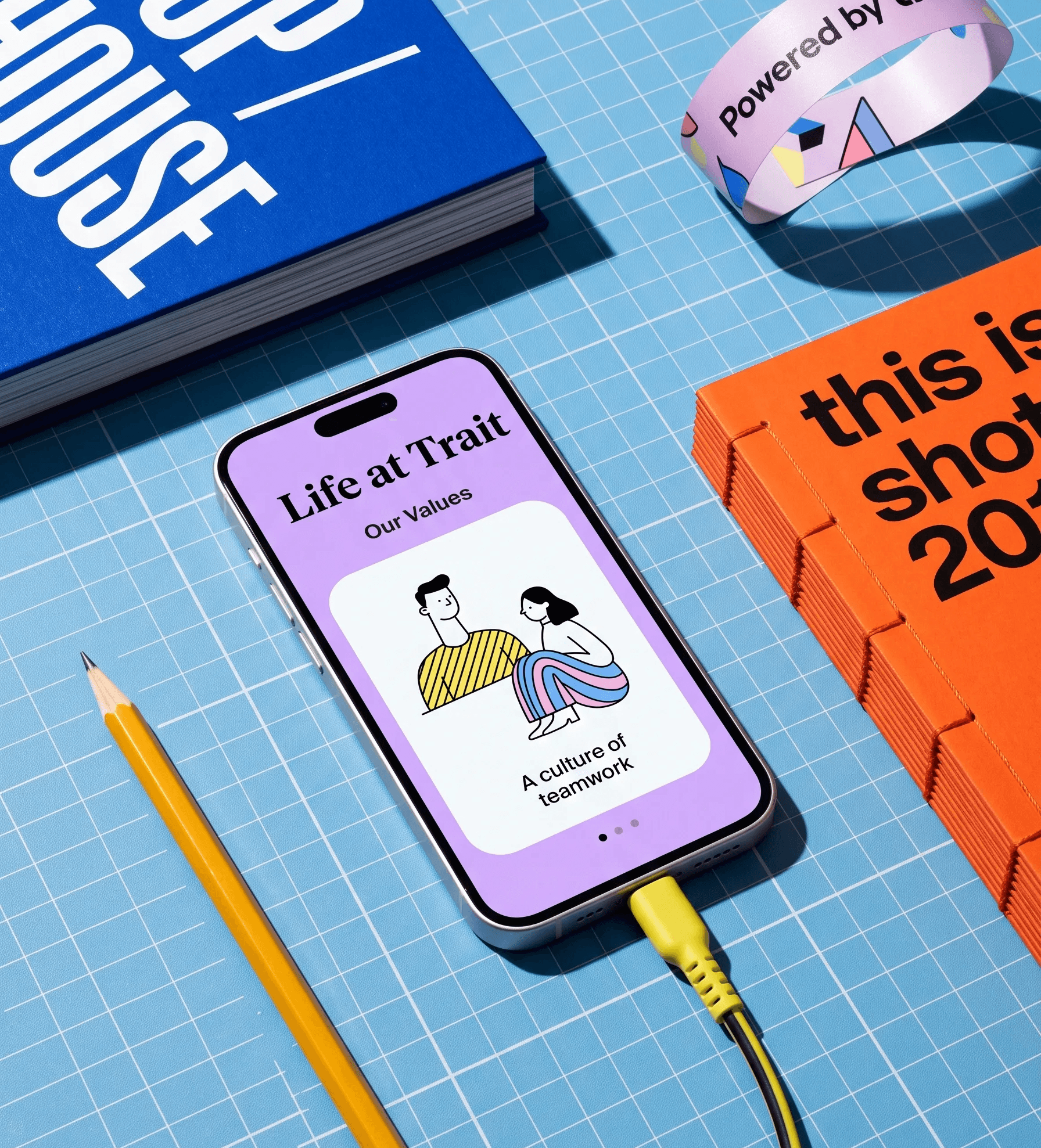
Most brand work is presented on a screen, at a size nobody will ever encounter it in real life. But an identity is almost always met through the hands first: a card, a box, a bag, a door handle with a mark stamped into it. Those encounters decide how the brand feels far more than any deck does.
So we design the physical object early, and we design it at the size it will actually be.
Material comes first
A mark behaves differently on uncoated stock, on foil, on moulded plastic. Ink spreads. Thin strokes close up. Fine detail that reads beautifully on a screen disappears entirely once it is embossed into card.
We choose the material before the artwork is finished, not after. It is cheaper to change a line weight than to change a production run.
The weight of a mark
Weight is the most underrated decision in identity work. A mark that is too light feels provisional in the hand. One that is too heavy feels clumsy on a screen. There is a range where it feels deliberate in both, and finding it usually means making and holding a dozen physical proofs.
Signing off on touch
We do not sign off a physical identity from a PDF. If it is going on a card, we print the card. If it is going on packaging, we make the box. The final approval happens with the object in someone's hand, because that is the only place the decision can honestly be made.
Conclusion
A brand is not a file. It is a set of objects that people pick up, carry, and eventually throw away. Designing for that reality changes what the work looks like, usually by making it simpler and more confident.